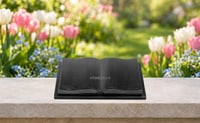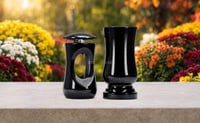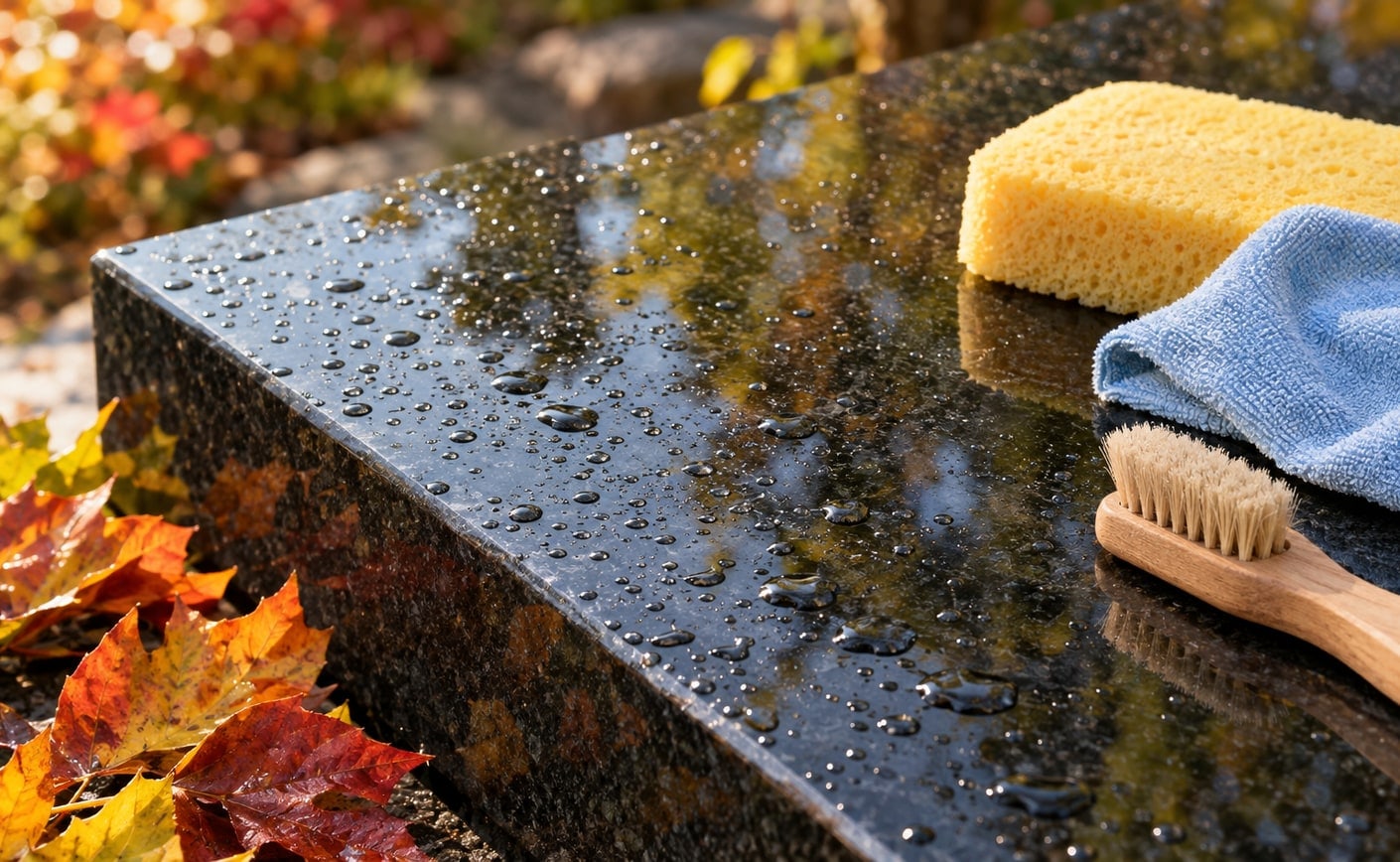
Granite rightly has a reputation for being durable and easy to maintain, but even its polished surface will, over time, collect dust, rain marks, residue, pollen, flower remnants and wax from candles. The good news is that in most cases, regular, gentle cleaning is all you need. Scrubbing with strong agents every few years usually does more harm than good. Below you’ll find a tried-and-tested process, a list of pitfalls to avoid, and tips for the grave vase, bowl and lantern placed on the slab.
What will you need?
- a soft brush or hand broom to remove leaves and grit,
- a bucket of clean, lukewarm water (ideally two — one for washing and one for rinsing),
- a soft sponge without a scouring layer or a microfibre cloth,
- a mild cleaner designed for natural stone, used exactly as per the label,
- a plastic spatula to lift loose wax residues,
- dry, clean cloths to wipe down the polished surface.
Step 1. Remove loose debris dry
Start by lifting leaves, twigs and grit with a soft brush. Take decorations off the slab, remove flowers from the grave vase and empty the grave bowl if you want to wash these items as well. Do not rub dry dirt across polished stone with a cloth — grains of sand act like sandpaper and can leave fine scratches, especially visible on dark granite.
Step 2. Wash the surface with a mild cleaner
Dampen the slab with clean water, then wash it in small sections without heavy pressure. Use the stone cleaner exactly as the manufacturer instructs — at the recommended dilution and contact time. Before using a new product across the whole monument, test it in a discreet spot. A headstone is rarely made from a single material: alongside granite you’ll find joints, lettering, metal elements or photos on porcelain, which may react differently to chemicals than stone.
Step 3. Rinse and dry
After washing, thoroughly rinse away any cleaner with clean water. Residual chemicals can leave streaks and, with the next rainfall, cause run marks. Dry the polished surface with a soft cloth. On black granite, such as Swedish Black or Nero Angola, this step determines the finish: wet stone looks beautiful, but water dries as pale spots.
How to remove candle wax?
Wax is the most common soiling on headstones. Do not prise it up with a metal knife or scraper — it’s easy to scratch the polished surface or chip an edge. Gently lift dried, thicker layers with a plastic spatula, then remove the remains with a cleaner suitable for stone. Avoid random solvents. If wax has penetrated the stone, left a discolouration, or you’re unsure what material a part of the monument is made from, it’s safer to consult a stonemason.
You can also prevent wax stains: place candles on a granite base or in a grave lantern. Wax then drips onto an element that’s easy to remove and clean, rather than onto the inscribed slab.
What to avoid when cleaning a headstone?
- wire wool, scouring sponges, powders and abrasive creams,
- sharp scrapers and metal tools,
- mixing different chemical agents,
- strong products with unknown applications,
- pressure washers without a stonemason’s approval — the jet can damage joints and lettering,
- cleaning in full sun, when water and cleaner dry too quickly and leave streaks.
Vases, bowls and lanterns on the slab
Clean accessories separately, according to their material. Granite grave vases and bowls are cleaned similarly to the slab, but first remove any insert and pour out standing water — that’s where residue builds up fastest. Clean the lantern only after the flame is out and the body is cool. Do not flood glass panes or metal parts with stone cleaner; clean them separately, following the manufacturer’s guidance. You’ll find more details in our guide How to care for granite memorial accessories all year round?
How often should you clean a headstone?
There’s no single rule — much depends on the grave’s location, nearby trees and the season. In practice, a quick clean during visits and a more thorough wash in spring and before 1 November work best. The sooner you remove residue, the easier it lifts and the less chemistry you need. After washing, only put decorations back when the slab and their bases are clean and dry.
Frequently asked questions
Can you wash granite with washing-up liquid?
A few drops of mild detergent in a large volume of water usually won’t harm when dealing with light soiling, provided you rinse thoroughly. For regular care, however, it’s better to use a product designed for natural stone and, if the headstone’s maker gave instructions, to follow them.
Are vinegar or acid-based products safe for a headstone?
We don’t recommend them without testing. Granite is resistant, but a monument can include marble, terrazzo, joints or lettering that react badly to acids. Always choose the product for the most sensitive material present on the slab.
How to restore shine to dulled granite?
Dulling caused by residue often disappears after careful washing and drying. If the surface is scratched or worn, restoring the gloss usually requires a stonemason’s work — don’t try to polish the slab yourself with abrasive products.
Summary
First remove loose dirt dry, then wash gently with a product suitable for the material, and finally rinse and dry the surface. Lift wax without metal tools, and don’t experiment with chemicals on stubborn stains. Regular, mild care is the simplest way to keep a granite headstone and accessories looking like new for years.