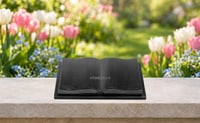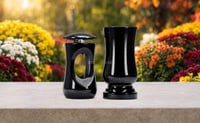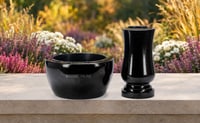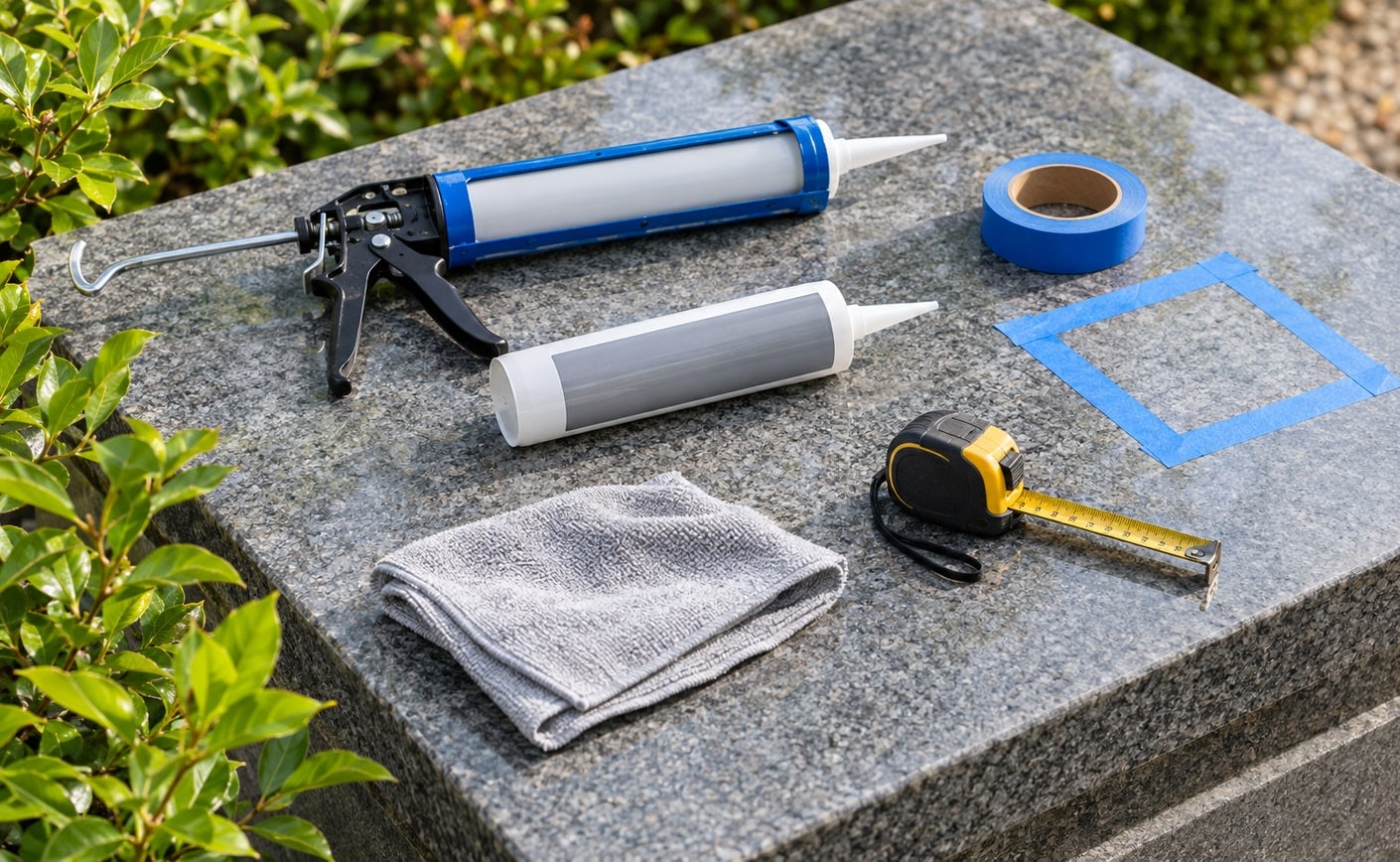
A properly fitted vase stands stable for years, won’t shift when the slab is cleaned, and is harder to remove. Poorly fixed, it can topple over, scratch the headstone or pose a risk to visitors. The fixing method must suit the specific product and surface. A lightweight ornament is handled differently from a granite vase weighing several or a dozen kilograms. Below is a safe step‑by‑step plan.
Check the product page first
Before you start, read the vase description. Check its weight, base dimensions and the recommended fixing method. StoneOnline granite vase pages recommend fixing to the headstone with silicone. If another vase’s manufacturer specifies anchors, plugs or a special mounting base, follow their instructions. Don’t assume every vase is installed the same way.
Plan the spot before you stick anything down
- Place the vase in the chosen spot without fixing.
- View the arrangement from several sides and from a distance.
- Check the vase doesn’t obscure inscriptions, a photo or a cross.
- Leave room for a bouquet, a grave lantern and candles.
- Make sure the vase isn’t right on the edge where it’s easy to knock.
- Mark the base position, e.g. with painter’s tape you’ll remove later.
If you’re planning several accessories, sketch the layout on paper. Tips in the article What to place on a headstone? will help.
Prepare the surface
Adhesives and silicone only bond to a clean, dry and stable substrate. Wash the fixing area and the vase underside, remove wax residues, dust and old adhesive, then dry both surfaces thoroughly. Fitting on a dusty or damp slab is the most common cause of vases coming loose. It’s best to work on a dry day at the temperature recommended by the adhesive manufacturer.
Fitting step by step
- Use a product designed for natural stone — as recommended on the vase page and in the adhesive manufacturer’s instructions.
- Apply it to the vase underside in the amount and pattern stated in the instructions, so it won’t squeeze out onto the visible part of the slab when pressed down.
- Set the vase in the marked spot and press evenly without sliding.
- Immediately remove any excess as per the product instructions.
- Don’t move the vase or put water or flowers in it until the adhesive has reached the manufacturer’s stated cure time.
When do you need a stonemason?
- when fixing requires drilling holes or anchoring,
- when the slab is cracked, uneven or clad with another material,
- when the vase must stand on an edge or a narrow plinth,
- when you’re fitting an exceptionally heavy item or several items at once,
- when you’re unsure what material the headstone is made from.
Don’t drill into a headstone unless you’re certain how it’s built. It’s easy to damage the stone, its edge or the waterproofing.
What not to do
- don’t use a random “all‑purpose” glue,
- don’t bond the vase on a wet or dusty surface,
- don’t readjust once the product has started to cure,
- don’t test stability by yanking it,
- don’t treat another model’s instructions as universal.
After fitting
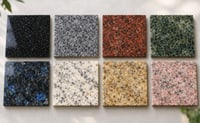
After the cure time, gently check the vase stands firm. Keep a note of the product used — it will help if you ever need to remove it or refurbish the headstone. An extra theft deterrent is an engraved mark, e.g. initials, which can be ordered as an option with many granite vases.
Frequently asked questions
Does a granite vase have to be glued down?
It’s not mandatory, but fixing increases stability and deters theft. StoneOnline vase pages recommend fitting with silicone.
Can the vase be removed later?
Usually yes, but it requires care to avoid damaging the slab or the vase. It’s best to ask a stonemason to handle removal.
Can I place the vase on a base?
Yes. A Granite base creates a distinct layer between the vase and the slab. Ready‑made sets are available in the grave vase sets with a granite base category.
Important
This guide does not replace the installation instructions for a specific product or the recommendations of the adhesive manufacturer. If in doubt, stop work and consult a stonemason.